
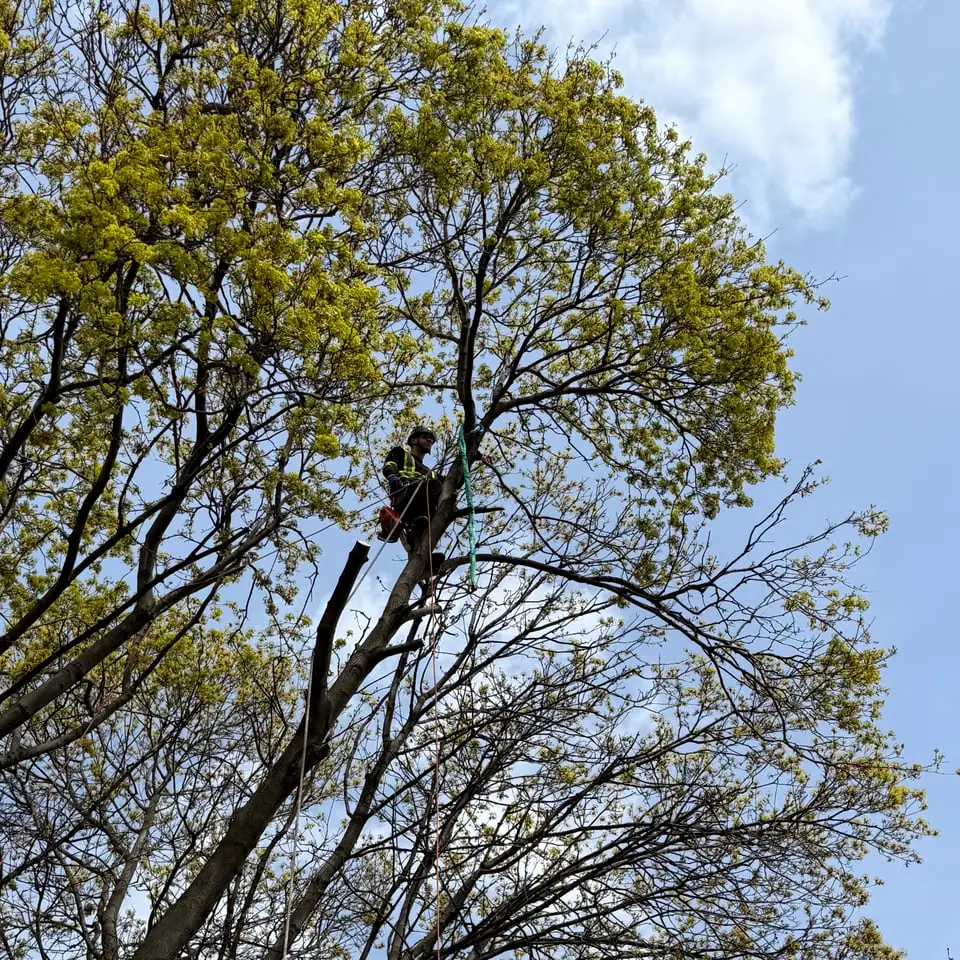
This one cannot wait for a scheduled quote. A trunk has split, a tree has come over onto something, or limbs are sitting in the canopy waiting to drop. High winds, heavy snow, and hidden decay turn a healthy-looking tree into a safety problem in a single night.
A damaged tree does not come apart the way a sound one does. Every emergency job starts with reading it: the condition of the trunk, the structures around it, where the stored pressure and tension are sitting, and the safest order to release them. That is the whole difference between this and a planned removal.
Call right away if you see any of these
- A tree or large limb has come down on the property
- A trunk is split, cracked, or has freshly started leaning
- Branches are hanging over a roof, driveway, or sidewalk
- Roots have lifted out of the ground after heavy rain or wind
- A storm-damaged tree is resting against another tree or a structure
- Broken limbs are hung up in the canopy overhead
Stay clear until the crew arrives
Do not stand underneath broken or suspended limbs, and do not try to cut a tree that is under tension — stored pressure is what makes storm-damaged trees dangerous. If anything is touching or near a power line, keep well back and contact your utility provider first.
What to send for a faster response
Call or text 905-920-4924. If it is safe, send photos from a distance, your address, and a quick note about what the tree is touching or threatening.